

What you 're looking for is right here
Here you'll find frequently asked questions and answers about moving to our region.
If you can't find the answer to your question, please feel free to contact one of our new resident advisors.
What is it like to work as a doctor at a small clinic?
Alexandra Wermelin works as a general medicine specialist at Storumans Clinic
Read more about Alexandra here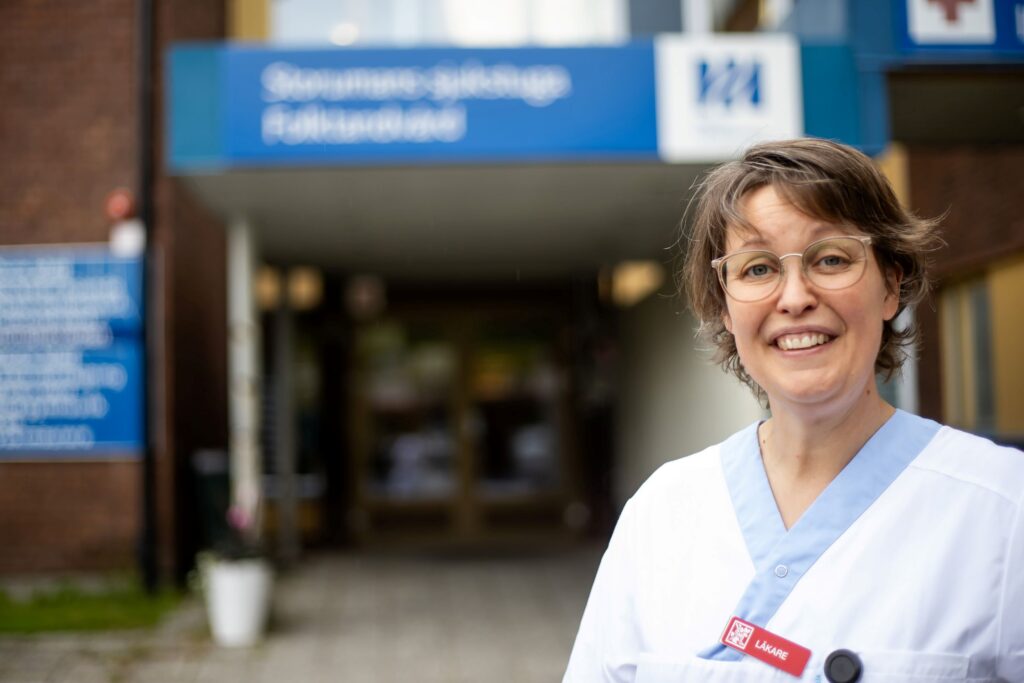
Hilde's New Love: Northern Sweden
She now works as a newcomer guide in Arjeplog
Read more about Hilde here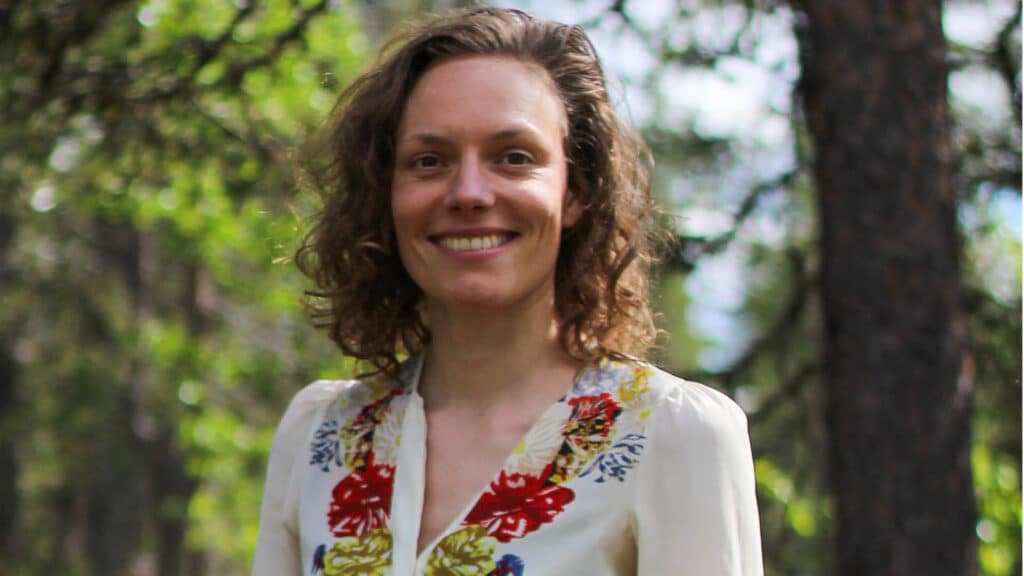
Andreas Ludvigsson, human resources specialist in Vilhelmina
Prefers short decision-making processes
Learn more about what it's like to work in a small municipality
FAQ
The Moving Process: How to Get Started
What steps should I take when moving to your region?
If you’re moving to Sweden for an extended period, step 1 is (almost always) to obtain a right of residence or a residence permit. The Swedish Migration Agency handles matters related to migration, visas, permits, and citizenship.
IF YOU ARE A NORDIC CITIZEN
Denmark, Finland, Norway, and Iceland, together with Sweden, make up the Nordic region. The Nordic countries have an agreement stating that Nordic citizens have the right to live in any Nordic country. You do not need to apply for a residence permit. To register as a resident in Sweden and obtain a Swedish personal identification number, you need to contact the Swedish Tax Agency.
IF YOU ARE AN EU/EEA CITIZEN
As an EU/EEA citizen, you have the right to work, study, or live in Sweden for three months. You also have the right to start and run your own business. The right of EU/EEA citizens to reside in Sweden is called the right of residence. You have the right of residence if, for example, you are an employee, self-employed, a student, or have sufficient means to support yourself. If you have the right of residence in Sweden, you do not need to contact the Swedish Migration Agency. Citizens of EU/EEA countries can obtain permanent right of residence (PUR) if they have lived legally in Sweden for five years without interruption. This may also apply to family members of EU/EEA citizens residing in Sweden.
IF YOU ARE A CITIZEN OF ANOTHER COUNTRY
A person who wishes to settle in Sweden and who is a citizen of a country outside the EU must apply for a residence permit. This is done through the Swedish Migration Agency. Obtaining a residence permit in Sweden means you have the right to live and reside here. A residence permit can be either permanent or temporary. A permanent residence permit is valid as long as the person continues to live in Sweden and can only be revoked in specific cases, such as if the person has committed a serious crime or has taken up residence in another country. A temporary residence permit is valid for a specified period but can often be extended if the requirements for continuing to live in Sweden are met. Anyone who wishes to move to Sweden to work must have received a job offer from an employer in Sweden. The position must also provide a salary sufficient for the person to support themselves. Anyone who wishes to move to Sweden to start or run their own business and plans to work for longer than three months must also have a residence permit. The person must then be able to demonstrate that they can support themselves and any family members for the first two years.
How do I register as a resident in this region?
Go tothe Swedish Tax Agency’s websiteand report your move. According to the Population Registration Act, you must be registered in the town where you spend the night. It is extremely important that you are registered in the correct town.
How can I get help obtaining a Swedish personal identification number?
The Swedish Tax Agency’s website has more information about personal identification numbers. The Swedish Tax Agency’s website has more information about moving to Sweden. You can also contact the Swedish Social Insurance Agency for more information.
How can I open a bank account in Sweden?
Opening a bank account in Sweden as a newcomer can be a straightforward process if you have the right documentation. Here is a step-by-step guide on how to do this and what you’ll need:
1. Get a personal identification number (personnummer)
A personal identification number is a unique identification number issued by the Swedish Tax Agency (Skatteverket). It is a basic requirement for opening a bank account.
To obtain a personal identification number, you must be registered in the Swedish Population Register, which means you are registered as a resident of the country.**You may also need a Swedish ID card to open a bank account. You can schedule an appointment with the Swedish Tax Agency to apply for a Swedish ID card.
2. Schedule an appointment with the bank
Once you have your personal identification number, schedule an appointment with a bank. Most banks require you to visit a physical branch to open an account.
3. Bring the necessary documentation
Passport or national ID card:You’ll need to verify your identity.
Personal identification number (personnummer):This confirms your right to reside in Sweden and is required to open an account.
Proof of address:Proof of your Swedish address, such as a lease or a letter from the Swedish Tax Agency confirming your registration in the population register.
Proof of employment or enrollment:If you are working or studying, this can simplify the process.
Residence permit:If you are from a country outside the EU, the bank may need to see your residence permit.
4. Choose an account type
Discuss with the bank which type of account best suits your needs. Typically, you open a checking account (transaction account) and can then add savings accounts or other financial products.
5. Mobile BankID
Once your account is open, you can apply for Mobile BankID, a digital ID used for many services in Sweden, including online banking and digital identification.
6. Consider the bank’s offerings
Banks in Sweden offer various packages and services, such as online banking, credit cards, and financial advice. Discuss what’s best for you based on your situation.
Popular banks in Sweden
Swedbank
SEB
Handelsbanken
Nordea
Länsförsäkringar Bank
How do coordination numbers work?
This is a temporary ID number for people who have not yet received a personal identification number. The Swedish Tax Agency issues it.
How does the tax system work?
The tax system in Sweden may seem complicated, but there are resources available to help you understand it better:
The Swedish Tax Agency —the official website for information on taxes and tax returns.
The Swedish Parliament – offers insights into how the tax system is structured and provides information on current laws and regulations.
FAQ
Housing
How do I find a place to live?
There are several ways to look for housing in our region. If you’re looking for a house for sale, Hemnet is a good website to see what’s available.
Hemnet.se – Region10
Another tip is to join local Facebook groups where you can post your own ad saying you’re looking for a place to live.
Apartments for rent can be found on each municipality’s website.
How much does housing cost?
Here in the inland areas of Norrbotten and Västerbotten, home prices are relatively low. Homes range in price from about 15,000 euros to over 300,000 euros, depending on where in the region you buy; homes are generally more expensive in central Lycksele and in the mountain regions.
Additional costs associated with owning a single-family home include property tax, trash collection, water and sewer, household electricity, home insurance, broadband, and heating.
Are there mostly rental apartments or houses in rural areas?
There are rental apartments available in many of the larger towns in these municipalities. When it comes to renting an apartment, the waiting lists aren't particularly long, and you can quickly find a place to live.
If you want to rent a house, you can often search for that type of housing through Facebook groups.
How does waste management and recycling work in the region?
The municipality offers curbside pickup and recycling centers. Sorting is simple and well-organized.
More information is available on each municipality’s website.
How good are broadband and mobile networks in rural areas?
Broadband is well established in many areas of our municipalities. This means there are good opportunities for internet access.
Cell service is reliable in many areas, but it can vary. It’s important to check cell coverage before heading out into the woods and countryside.
FAQ
Family Life and Education
Am I eligible for child care for my children?
Child care is provided by municipalities to make it easier to balance work or studies with parenthood. Normally, your child is entitled to attend preschool or educational care from age one to five. Your child is entitled to after-school care (fritids) between the ages of six and twelve.
For preschool services, you pay for a spot. The fee is determined by your income, the number of children you have, and your need for childcare. The fee is often subsidized.
How does my children's schooling work?
At age six, children begin compulsory elementary school, from preschool through 9th grade. After that, students can choose from a wide variety of three-year programs in high school.
School is free. Textbooks and lunch are free. Students from preschool through 9th grade are also eligible for free school transportation if they live a long way from school.
Does my child need to know Swedish to start school?
No, schools offer language support and orientation for new arrivals.
Are there opportunities for higher education?
There are several institutions of higher education near the ten inland municipalities. Umeå, Skellefteå, Luleå, and Östersund are examples of nearby cities.
Many programs can now be taken remotely, which opens up opportunities to combine studies with a permanent residence, family life, and work.
FAQ
Work and Entrepreneurship
What kind of work can I do?
The types of jobs you can pursue depend on your education, experience, and interests. Some good resources for exploring career opportunities are:
The Swedish Public Employment Service – offers tools to discover careers and labor market information.
Yrken.se – a website where you can read about different careers and what they entail.
Can my partner also get help finding a job?
Yes! We support the whole family throughout the moving process.
Do I need to know Swedish to work?
It depends on the job, but most workplaces appreciate it if you learn Swedish over time.
What should I do if I want to start my own business?
Starting your own business involves several steps, including creating a business plan and registering the company.
All ten municipalities have advisors you can contact to get answers to your questions about entrepreneurship.
Here are a few more resources that can help you:
verksamt.se – a Swedish website that compiles information on starting and running a business.
NyföretagarCentrum – offers advice and information for aspiring entrepreneurs.
What are the terms of employment and the work environment like?
Employment conditions and the work environment may vary depending on the workplace and industry.
Here are some sources for more information:
Unionen – a labor union that provides information on employment conditions and the work environment.
The Swedish Work Environment Authority – provides information on the work environment and regulations for a healthy work environment.
Is there technology that would allow me to work from home?
Yes, there is a lot of technology that makes it possible to work from home. Broadband coverage is well-established in many parts of our region.
Here are some tools and technologies that can make remote work easier:
Communication tools
Slack – for fast and efficient internal communication with the team.
Microsoft Teams – a platform for both chat and video meetings.
Video Conferencing
Zoom – a popular tool for video conferences and meetings.
Google Meet – a video conferencing tool that integrates with Google services.
Project and task management
Trello – a visual project management platform.
Asana – for managing projects and tasks.
File Management and Storage
Google Drive– for storing and sharing files.
Dropbox – another popular service for file storage and sharing.
FAQ
Health and Safety
What should I do if I get sick?
Every community has one or more health centers. That is where you should go first if you are sick or need advice. Health centers usually have doctors, district nurses, occupational therapists, physical therapists, midwives, and social workers on staff.
Lycksele has a well-equipped hospital, and the county’s ambulance helicopter is also stationed there.
The healthcare advice line at 1177 is always open and can provide you with medical advice and help determine whether you need to seek medical care for treatment. If you become acutely or seriously ill or injured, call SOS Alarm at 112 or go to the nearest emergency room.
A doctor’s visit costs between 10 and 30 euros. Health care for children and young people is free. Prenatal care and many other routine checkups are also free. To schedule an appointment, renew a prescription, or handle other needs, you can log in with BankID on the 1177 website.
You can purchase your medications at a local pharmacy.
Emergency care
Emergency care is available to everyone, including tourists and people without a personal identification number, but patient fees may apply.
Can I feel safe in your municipalities?
Crime rates are low, and the streets and public squares are quiet and safe. In smaller communities, most people know each other and help keep an eye on what’s going on. Children can usually play outside on their own.
Are there any dentists?
All ten municipalities have a public dental care service (Folktandvården) that provides routine dental care for children, adolescents, and adults. You can also visit a private dentist.
Dental care is not fully covered by the same system as medical care. For children ages 0–19, Folktandvården is free of charge. For adults, there are government subsidies, but it can still be expensive.
How does health insurance work in Sweden?
The Swedish healthcare system is primarily funded through taxes, which means that healthcare is essentially free of charge when needed, with a few exceptions such as patient copayments.
The regions are responsible for providing healthcare, and they operate most hospitals and health centers.
To access public healthcare, you must have a personal identification number and be registered in the Swedish Population Register. Once you are registered in the population register, you are automatically entitled to healthcare under the same conditions as Swedish citizens.
Although healthcare is publicly funded, there are patient fees for certain types of care, such as doctor’s visits, specialist visits, and hospital stays. There is a high-cost protection program that ensures you do not have to pay more than a certain amount per year for medical care and medications.
What is the high-cost protection?
For medical care:If you reach a certain amount in patient copayments within a 12-month period, the rest of your care during that period is free of charge.
For medications:Once you have paid a certain amount for prescription medications over a 12-month period, the remaining medications are free.
E-health and digital healthcare
Sweden has a growing system for digital healthcare where you can see a doctor online via apps and web services, often at a lower cost than in-person visits.
Healthcare for specific groups
Pregnant women:Prenatal and maternity care are free.
Older adults: Older adults may be eligible for reduced fees for certain services.
FAQ
Community Services and Communication
How does public transportation work?
The distances between towns in the region can sometimes be long, but the roads are well-developed and you won’t have any trouble finding a parking spot.
European Routes 45 and 12, as well as National Highways 95, 92, and 90, run through the region.
All municipalities in the region are within easy reach of an airport. Lycksele, Arvidsjaur, and Hemavan have airports. Outside Region 10, Umeå, Östersund, Skellefteå, and Luleå are also used by residents.
Do I need a driver's license and a car to live in your region?
The simple answer is that it’s good to have a driver’s license and a car because the distances are long and buses don’t run as often as they do in more densely populated areas.
Can I use my driver's license?
Driver’s licenses from EU/EEA countries
If your driver’s license was issued in an EU country, you can use it anywhere in the EU. Before you travel, you should check that your driver’s license is still valid. If your driver’s license expires while you are traveling abroad, it automatically becomes invalid and is not recognized in other countries.
If you have a driver’s license from an EU/EEA country, it is valid as long as it is valid in the country where it was issued and has not been exchanged for a Swedish driver’s license. Your driver’s license remains valid even if you are registered as a resident in Sweden.
Driver’s licenses issued in Denmark, Finland, Iceland, or Norway are valid in Sweden provided that:
– the license is valid in the country where it was issued
– the license has not been exchanged for a Swedish driver’s license
– the license holder does not also have a Swedish driver’s license that has been confiscated or revoked.
Driver’s licenses from countries outside the EU/EEA
If your driver’s license was issued in a countryoutside the EU/EEA, it is valid in Sweden if it is valid in the country where it was issued and has not been exchanged for a Swedish driver’s license.
The driver’s license is not valid in Sweden if you have been registered in the Swedish Population Register for more than one year.
How does winter driving work in northern Sweden?
Winter tires are highly recommended, and be sure to drive carefully on the roads.
FAQ
Lifestyle and Climate
What is the climate like in Norrbotten and Västerbotten?
Here you’ll find a variety of seasons, including real winters with snow, summers when it’s light around the clock, fall for mushroom and berry picking, a short and intense spring, and the season we usually call “early spring,” when the light returns and we spend a lot of time outdoors skiing, riding snowmobiles, or simply enjoying a leisurely walk.
The average temperature in January is around minus 8 degrees, but it can get as cold as minus 30 on some days. In July, the average temperature is around 15 degrees, but it can be as warm as plus 25 degrees—a truly lovely temperature for swimming.
What's the best way to learn Swedish?
Once you have been registered in the population register and received a personal identification number, you can take free Swedish language courses (SFI). The municipality is responsible for SFI.
You can also take Swedish courses online.
Some municipalities may also offer evening classes.

Can't find the answers to your question?
